 Lake Garda Travel Guide
Is Lake Garda Worth Visiting? An Honest Verdict
Is Lake Garda worth visiting for a first trip to Italy? For most people, yes. It is Italy's largest lake at 369.98 km2, 51.60 km long, and it packs three different landscapes, Roman ruins, a mountain cable car and working wine towns into one shoreline. This page gives the verdict with the dates and prices that decide it, and points to things to do in Lake Garda and what to see in Lake Garda for the detail.
Quick answer The verdict, who it suits, what can spoil it
Yes, Lake Garda is worth visiting for two to four days between late March and October, when the boats run across 51.60 km of water from the low moraine south to the mountain north. It suits train arrivals, families, hikers and wine drinkers. It suits a car-free winter trip badly, because no passenger boat runs from 2 November to 12 March and you see one shore only. In August heat it also makes a poor one-town city break, and Sirmione closes its centre to all traffic on 31 afternoons.
Key takeaways
- Short on time? The Sirmione and Lazise day from Verona with a boat crossing costs $123 and runs 7.5 hours from the arena city. See Verona to Lake Garda for the do-it-yourself version by train and boat.
- Pick the shore before the hotel. The south has the railway stations and the Roman sights. The north has the mountain, the cliffs and the rain. Match it to your season and how you travel on where to stay.
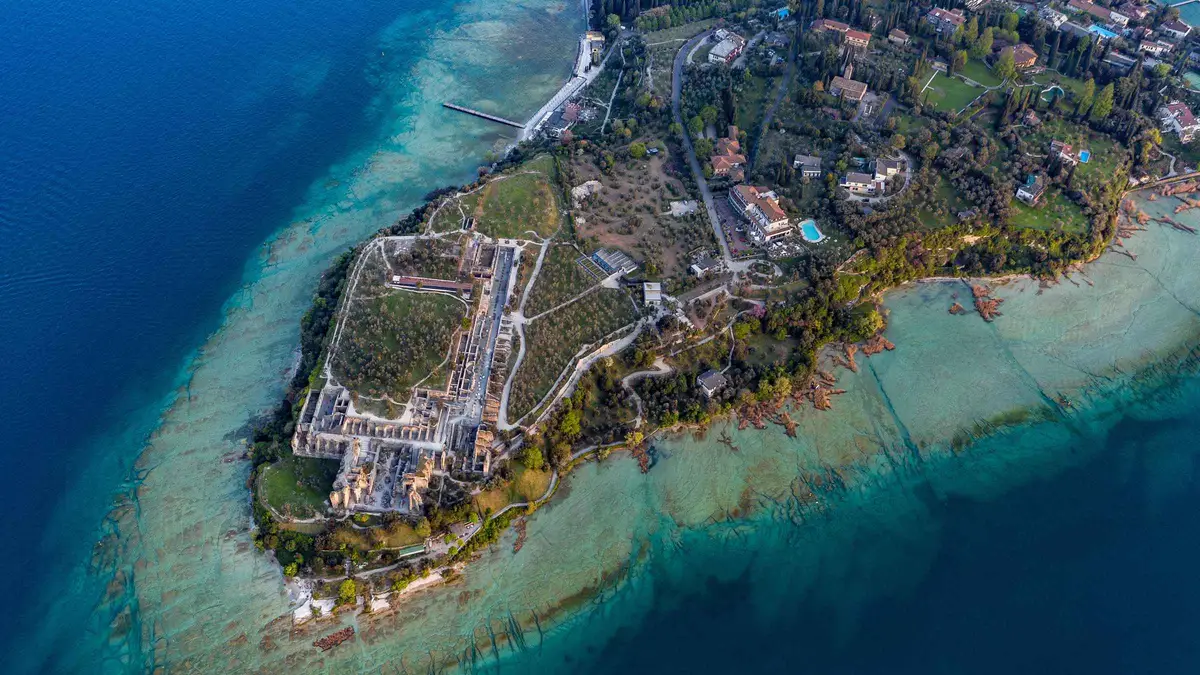
- The cheapest way to taste the lake is the 25-minute Sirmione peninsula cruise at $13, leaving from the small harbour in front of Sirmione's castle, with free cancellation up to 24 hours before.
- Three days is the sweet spot for seeing Lake Garda attractions: one shore, one boat day, one mountain or city day. Follow the ready-made plan in Lake Garda in 3 days.
The Verdict, by Kind of Traveller
The honest answer is yes, but the lake rewards different travellers in different months.
Travellers who get the most from Lake Garda arrive between late March and October, sleep two or more nights, and let the boats or a car move them between shores. Train arrivals do well, because Desenzano and Peschiera sit on the Milan-Venice line. Hikers and windsurfers get the north tip, wine drinkers the Bardolino and Lugana hills, families the flat south with its parks and beaches.
The lake rewards least those who come car-free between 2 November and 12 March, when no passenger boat runs, and those who try to see Sirmione on an August afternoon by car, when the historic centre shuts to traffic and the fines bite. The table below sums up who the lake suits and what each type should plan around. The figures come from the ferry operator, the Comune of Sirmione and the regional tourism boards.
| Traveller | Verdict | Base | Plan around |
|---|---|---|---|
| First trip, arriving by train | Yes | Desenzano or Peschiera | Boat days need the summer timetable, 16 May-4 October |
| Hikers, climbers, windsurfers | Yes | Riva, Torbole, Malcesine | About 1,356 mm of rain a year at the north tip |
| Wine and food | Yes | Bardolino or Lazise | Chiaretto at the end of May, the grape festival September-October |
| Families | Yes | The south shore | The Gardaland ticket is fixed date and non-refundable |
| Day-trippers from Verona or Milan | Yes, one shore | None needed | Sirmione's ZTL and its pedestrian afternoons |
| Car-free visitor, November-March | Only partly | Sirmione or Riva | No passenger boats 2 November-12 March |
Why It Earns the Days
Five reasons keep pulling visitors back, each with a number behind it.
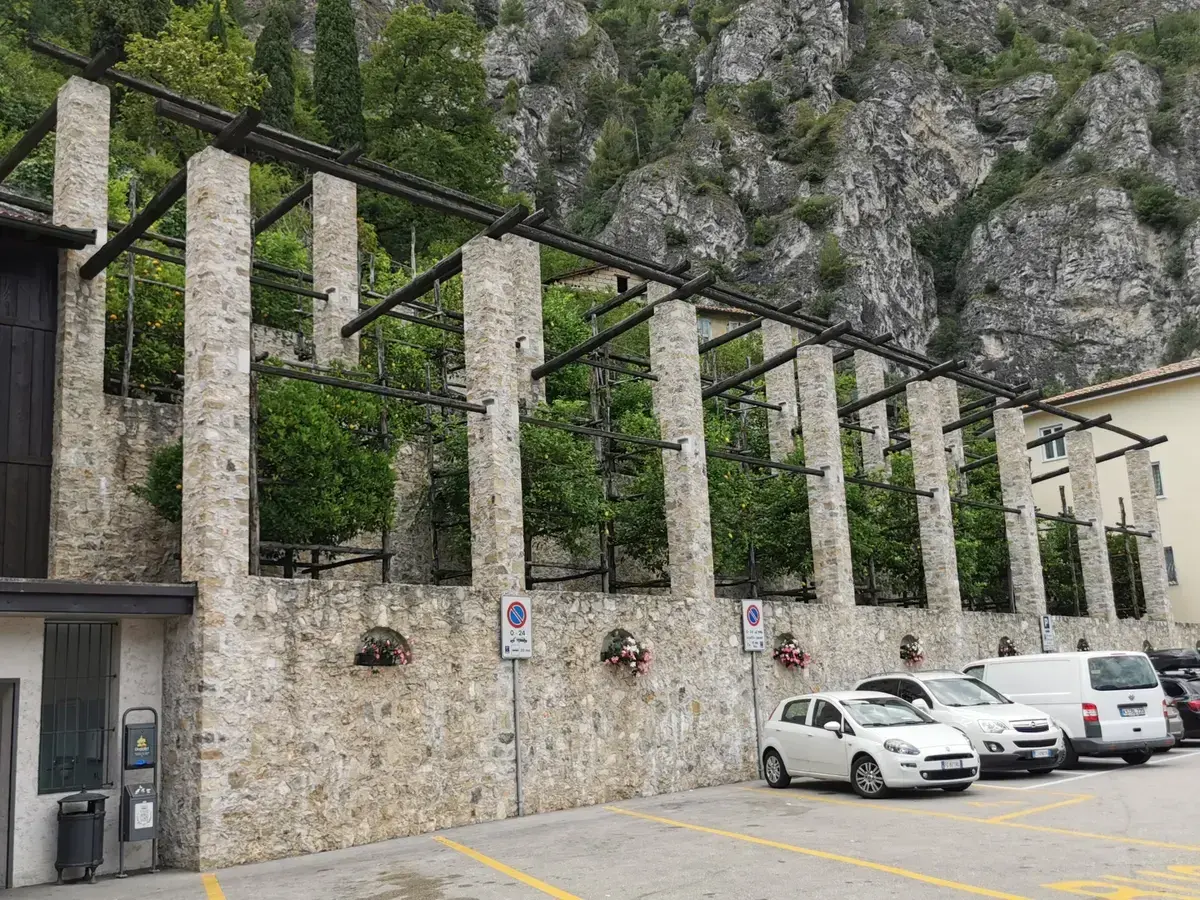
The pillars of the Comboniani fathers' lemon orchard in Limone sul Garda. Photo: Syrio, CC BY-SA 4.0, via Wikimedia Commons
Three Lakes in One
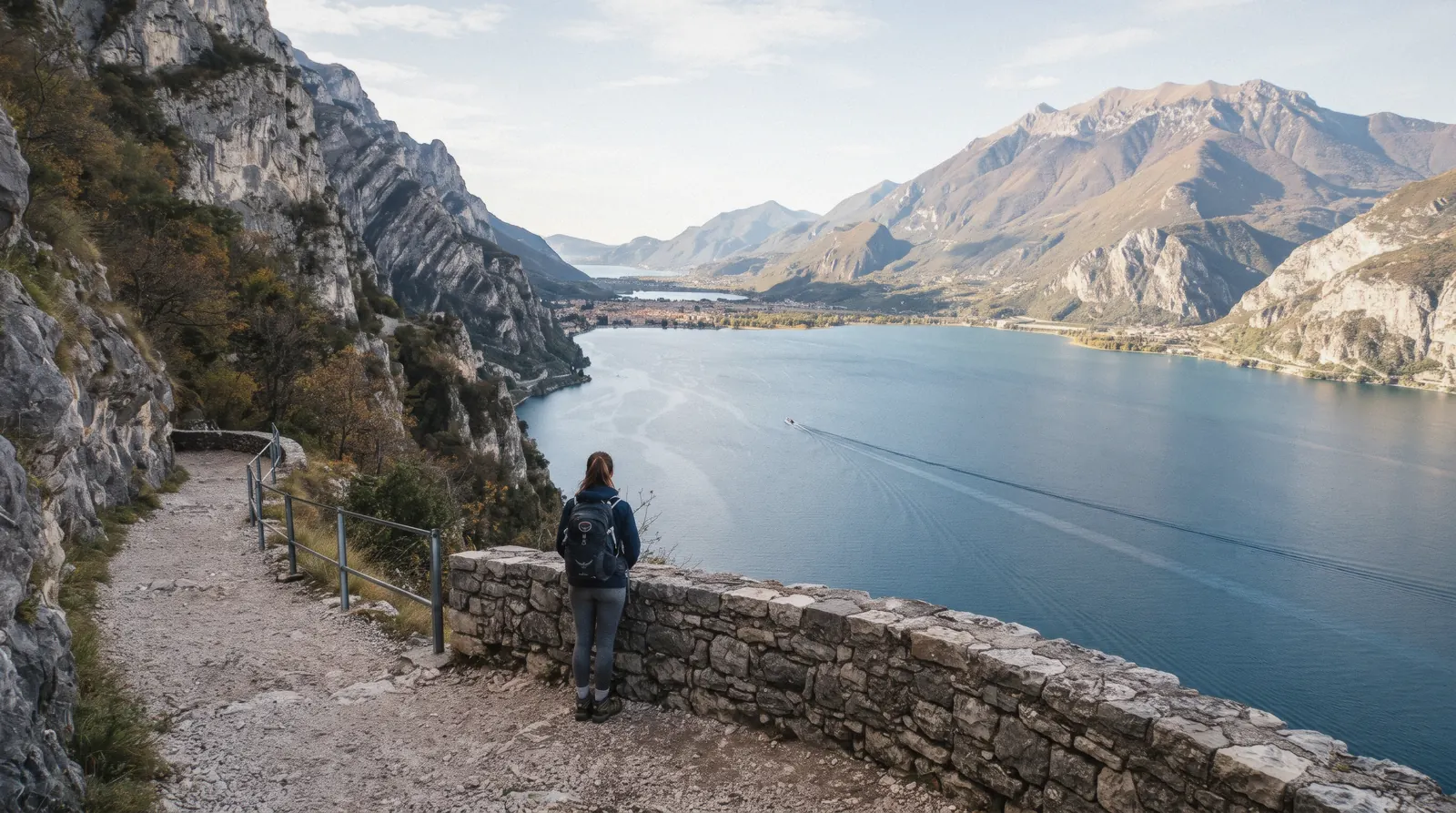
Lake Garda is Italy's largest lake, 369.98 km2 of water, up to 51.60 km long, 17.20 km wide and 346 m deep, with a shoreline of 158.40 km. Three regions share it. Lombardy holds the west and south-west shore, Veneto the east, Trentino the narrow tip at Riva del Garda and Torbole.
The wide south is low moraine country left by the retreating ice. The north is a fjord-like arm under high mountains. Despite the latitude, olives, lemons, palms and cypresses grow at the water's edge, the mark of a mild Mediterranean-type climate.
In practice this means one base can serve a beach week, a mountain day and a wine afternoon without changing hotels. Compare the towns side by side on Lake Garda towns.
Roman Villas and Scaliger Castles
At the tip of the Sirmione peninsula stand the Grottoes of Catullus, the remains of a Roman villa built between the end of the 1st century BC and the start of the 1st century AD, with an archaeological museum attached. Entry costs $11.17 (€10), cards only at the site. At the neck of the same peninsula sits the Scaliger castle, a moated water castle that also costs $11.17 (€10) and includes the keep.
A combined ticket covering the castle, the Grottoes and the Roman villa in Desenzano costs $22.34 (€20) and stays valid for 7 days. Both Sirmione sites close on Mondays, and the hours the Ministry lists need a check before you go, since the page does not say if they are summer or winter hours. Plan the visit on the Grottoes of Catullus and Sirmione castle.
A Mountain Over the Water
From the shore at Malcesine, on the Veneto shore, the Monte Baldo cable car climbs to the Tratto Spino top station at 1,760 m in about 20 minutes. An adult return costs $33.52 (€30) at the desk, $31.28 (€28) online, and children up to 1.20 m travel free. At the top the climate changes completely, our 30-year averages put a July afternoon at 17.4°C (63°F) against 29.6°C (85°F) at lake level in the south, roughly 12°C colder, so pack a layer.
The lift closes for maintenance from 2 November to 25 December and wind can stop it at any time. Tickets, seasons and walking routes are on Monte Baldo.
Boats Between the Towns
The lake works as a transport network in season. Ordinary one-way fares run from $1.68 (€1.50) for the shortest hops to $19.55 (€17.50) for the full Desenzano to Riva run, and children aged 4-11 pay about half. The hop from Desenzano to Sirmione costs $3.91 (€3.50) and takes 20 minutes.
One ordinary boat covers the whole lake from Peschiera to Riva in close to 5 hours, which is a sightseeing cruise in itself. A whole-lake day pass costs $44.13 (€39.50) and is the only pass that includes the fast services. If you prefer a guide, the four-hour cruise with a stop in Sirmione costs $61 per person with two hours of free time in town.
Fares, passes and timetables are on the Lake Garda ferry.
Wine and Oil
The same mild climate that grows palms grows vines and olives. Olio Garda DOP has held protected status since 1997, pressed from the Casaliva, Frantoio and Leccino cultivars in municipalities all around the lake. On the Veneto shore, Bardolino makes its red and its Chiaretto rosé, and Desenzano is one of the areas that produce Lugana.
To taste them where they are made, the Bardolino vineyard tasting costs $40 for a 1.5-hour small-group visit with five wines, olive oil and local cold cuts and cheeses, capped at ten people. The wine year, the Grape and Wine Festival and where to drink are on Bardolino wine.
Source: VisitGarda, Ministry of Culture, Garda museums, Funivia Malcesine-Monte Baldo, Navigazione Laghi, Consorzio Olio Garda DOP.
What Can Spoil It
Four things go wrong often enough to plan around, and each has a fix.
The Winter Gap
From 2 November to 12 March no passenger boat runs on the lake. The only service is the Maderno-Torri car ferry across the narrows, so a visitor without a car sees one shore and one town. The Monte Baldo cable car also shuts for maintenance from 2 November to 25 December, and several sights cut to weekend hours.
The Christmas markets in Arco, Riva del Garda, Rango and Canale di Tenno run from mid-November, and the median room rate in Sirmione falls to $81.56 (€73). The fix is simple. Come by car, or accept one base and one shore, and treat the trip as a quiet lake-and-markets break rather than a touring one.
What actually runs is on Lake Garda in winter.
Sirmione in High Season
Sirmione is the lake's most famous sight and its worst traffic trap. The historic centre sits on a peninsula with one electronic entry point, under a ZTL camera zone in force from 23 March to 13 October. Driving in without authorisation brings a fine of $92.73 (€83) to $372.03 (€333).
On 31 afternoons in the season, from 14:00 to 19:00, the centre goes fully pedestrian and no vehicle may enter or leave, so a car inside stays there until 19:00. The fix costs little. Arrive by boat, the ferry from Desenzano is $3.91 (€3.50) and 20 minutes, or come at opening time, when the castle opens at 8:30.
The practical detail is on Sirmione.
The North Without a Station
The scenic half of the lake has no railway. Riva del Garda, Torbole and Arco sit in Trentino, and the nearest station is Rovereto, followed by a Trentino Trasporti bus, which you cannot buy a ticket for on board. The mountains also bring their own weather.
The north tip records about 1,356 mm of rain a year against 981 mm in the south, and it is wetter in every single month, so a hiking week in the north needs indoor backups. The fix is to plan the north by boat in season, when the Malcesine-Limone-Riva line runs, or bring a car, and to check the forecast town by town rather than lake-wide. Plan around it on Riva del Garda and Lake Garda weather.
Rooms in July
High season prices test the value case. The median rate Google Hotels returned for a mid-July Wednesday night for two adults was $225.67 (€202) in Sirmione and $222.32 (€199) in Riva del Garda, against $81.56 (€73) in Sirmione in mid-November. These are small samples from one search and rates move daily, so treat them as an order of magnitude, not a promise.
The fix is the shoulder season. The same rooms in mid-May had medians near $155.29 (€139) in Sirmione, the boats run, the cable car runs and the ZTL still applies, so plan the peninsula arrival by boat. Where the money goes is on Lake Garda costs.
Source: Navigazione Laghi fares, Navigazione Laghi winter timetable, Comune di Sirmione, Garda Trentino, Google Hotels via DataForSEO.
How Many Days It Deserves
The lake pays back time, but it can also be sampled in a single long day.
One Day
One day buys one shore done properly, and Sirmione is the classic choice, with the castle at the gate, the Roman villa at the tip and the ferry link from Desenzano. If you are based in a city instead, a day trip works. The Verona and Sirmione day from Milan with a boat costs $115 and runs 11 hours, combining Verona's arena and Juliet's house with a private boat around the Sirmione peninsula, entries and lunch included. From Verona itself, the train to Peschiera or Desenzano plus the boat is the independent route.
The single-day plan, with timings and the boat that connects them, is on Lake Garda in 1 day.
Two to Four Days
Two days cover the south plus one other shore, for example Sirmione and Desenzano on day one, then the boat north to Malcesine on day two. Three days let you add the whole-lake boat day, close to 5 hours end to end on an ordinary boat. Four days add a mountain day on Monte Baldo, a Verona afternoon or a Dolomites run, and room to sit in a wine town without a timetable.
Past four days the lake still holds, but you start repeating shores and should turn to the day trips instead. Ready-made plans for each length are on Lake Garda in 2 days and Lake Garda in 3 days.
Which Part Is Most Worth Seeing
The lake splits into a convenient south and a scenic north, and the best answer depends on how you travel.
The South
The south is where the logistics work. Desenzano del Garda and Peschiera del Garda sit on the Milan-Venice railway line, so this is where train arrivals land, and Peschiera's Venetian walls have been a UNESCO site since 2017. Sirmione, on the peninsula between them, holds the Roman Grottoes of Catullus and the moated Scaliger castle.
East along the shore, Lazise and Bardolino are walkable wine towns with lakeside promenades and weekly markets, and Gardaland sits between Lazise and Peschiera for families with a full day to spare. If you arrive without a car or have only two nights, base here. Start planning on Desenzano del Garda and Lazise.
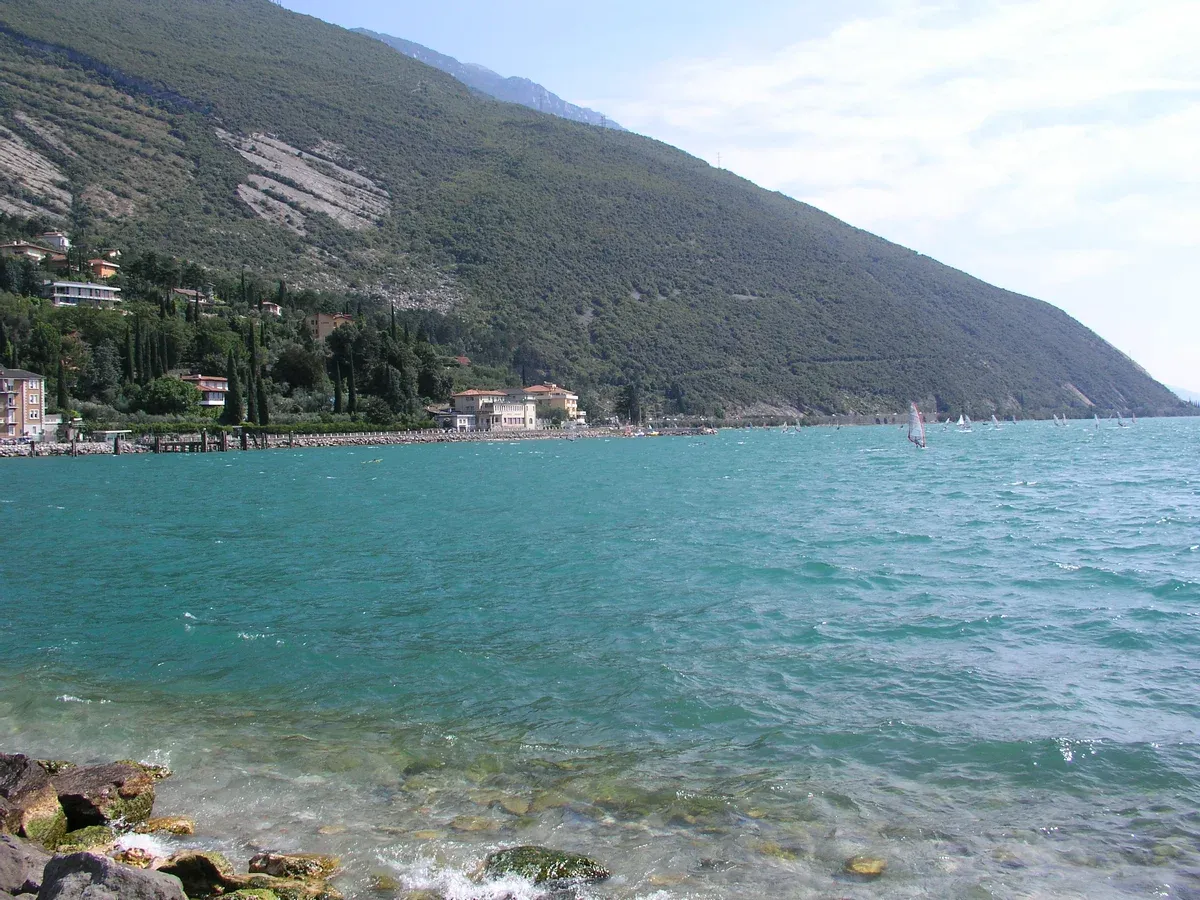
The north basin from Torbole, with Monte Baldo's flank on the left. Photo: Stefano Petri, CC BY 3.0, via Wikimedia Commons
The North and the West
The north is the scenic half, and it takes more effort to reach. Malcesine has the Scaliger castle under its rock and the cable car to Monte Baldo at 1,760 m. Limone sul Garda keeps its lemon terraces on the cliff.
Riva del Garda sits where the mountains close in, with the Ponale path climbing from the water, and the Strada della Forra threads the cliffs to the west. Further down the west shore, Gardone Riviera holds Il Vittoriale, the monumental home of the poet Gabriele d'Annunzio. Come here for landscape, walking and wind sports, ideally with a car or by boat in season.
Start on Malcesine, Limone sul Garda and the Strada della Forra.
Garda Against the Alternatives
A fair verdict weighs the lake against staying in a city or picking a different lake.
Another Lake
The comparison most travellers make is with Lake Como, and it deserves a page of its own rather than a paragraph of impressions, so the full breakdown is on Lake Garda vs Lake Como. What can be said here from the lake's own record is this. Garda is the largest Italian lake, its south shore has direct railway stations on the Milan-Venice line, and it has a cable car that lifts you from the shore at Malcesine to 1,760 m in about 20 minutes.
It also spans three regions, so a single trip mixes moraine flatland, a fjord-like mountain arm and a mild west shore where olives grow.
A Base for Day Trips
The lake is also a calmer base than Verona or Venice for seeing the region. Verona is 13-19 minutes from Peschiera by regional train for $4.52 (€4.05), Venice and Mantua are both reachable as long days, and the Dolomites make a full-day run north. Organised options save the driving. The Dolomites day from the lake costs $95 per person, runs 10-12 hours with hotel pickup at 17 meeting points around the lake and an optional cable car at Pordoi Pass for $31.28 (€28) extra.
A base in Desenzano or Peschiera puts you on the rail line for the city days and on the ferry piers for the lake days. The full list is on day trips from Lake Garda.
Source: Trenitalia.
A First Taste, Booked
If the question is whether the lake deserves the days, these cards answer it cheaply or in one long day: a short peninsula cruise, a guided boat day, two day trips from the cities and a vineyard. Each opens the operator's live calendar.
 from $13
Editor's pick
Sirmione: 25 Minute Boat Cruise around the Peninsula
A short and cheap 25 minute loop around the Sirmione peninsula with captain narration, run by the operator based at the castle harbor.
Check Availability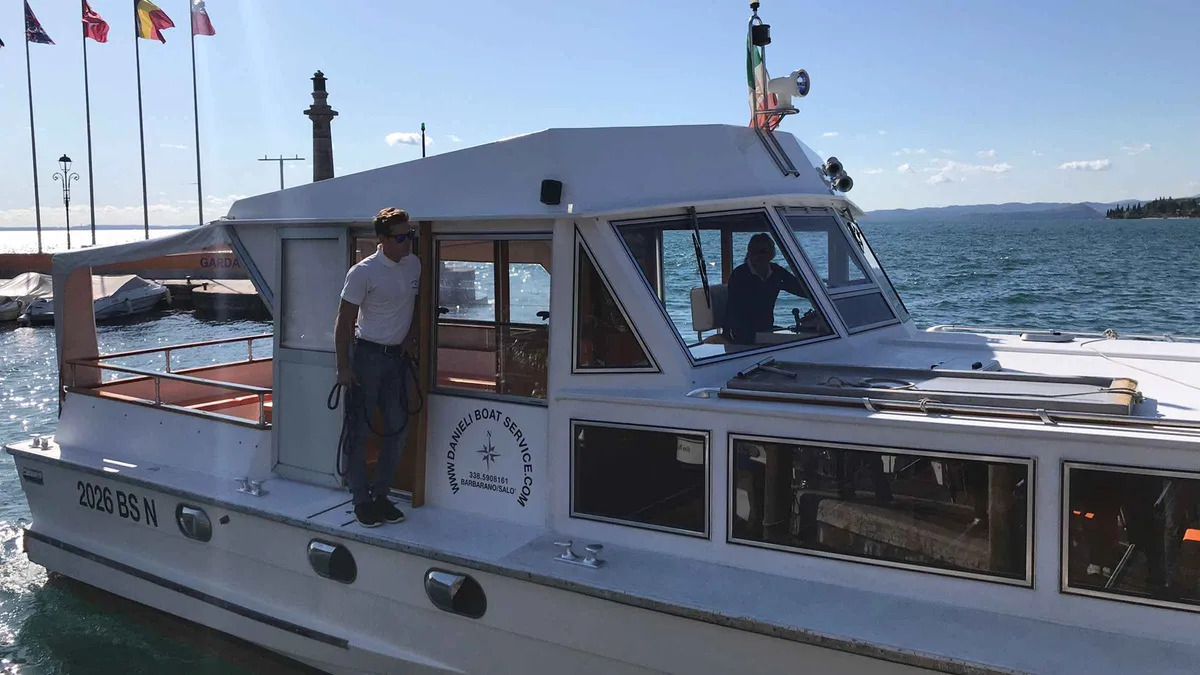 from $61
Lake Garda: 4-hour Guided Boat Cruise with Stop in Sirmione
A four-hour guided Lake Garda cruise with a two-hour free-time stop in Sirmione, photo stops along the shore and a guide in English or German.
Check Availability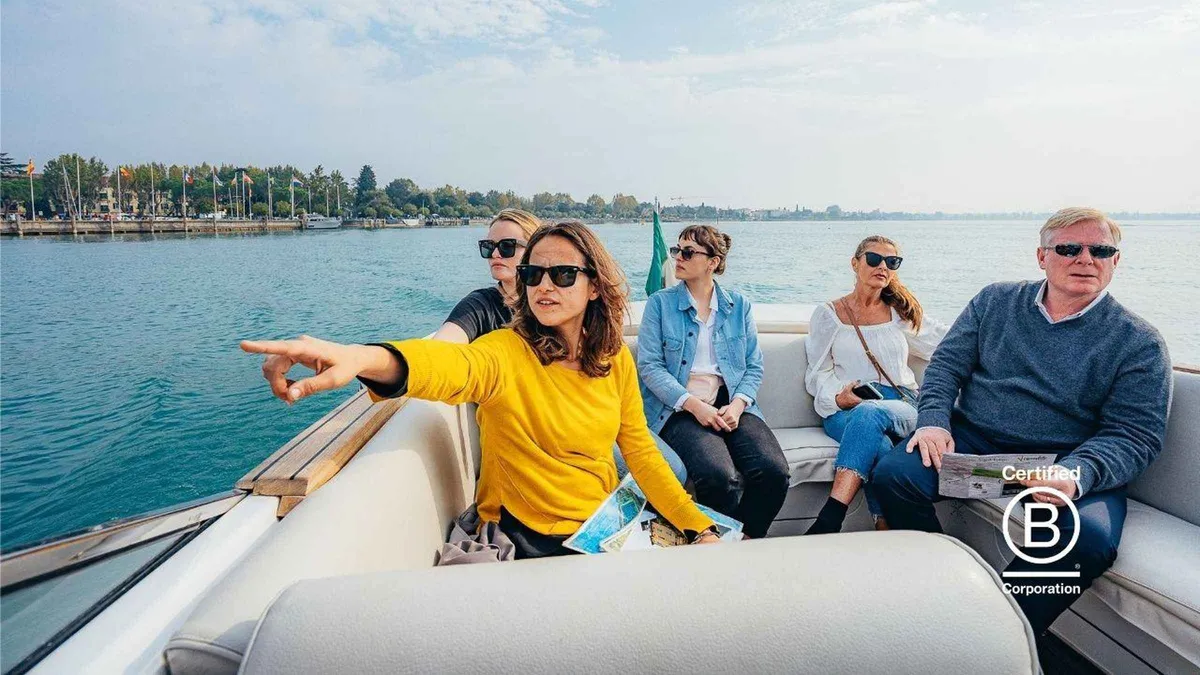 from $123
From Verona: Sirmione and Lake Garda Day Tour with Cruise
Guided Sirmione walk plus a boat crossing to Lazise, with free time in both towns and an optional Catullus caves add-on.
Check Availability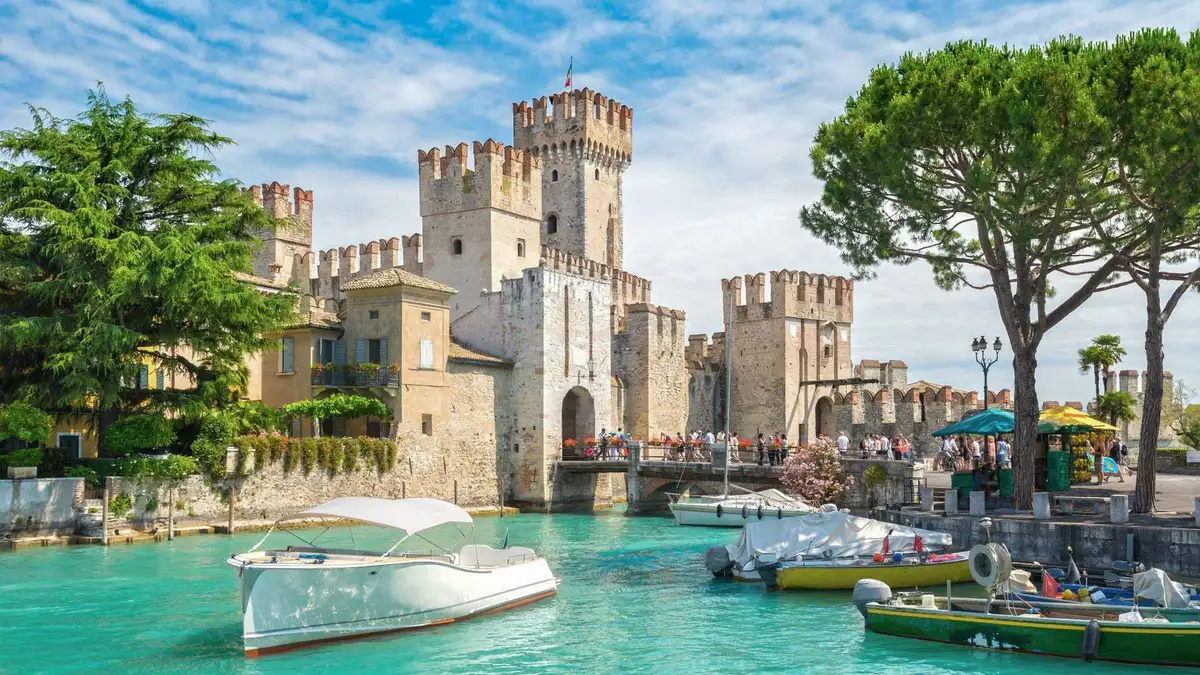 from $115
From Milan: Verona, Sirmione and Lake Garda with Boat Cruise
A long day combining three hours in Verona with a private boat cruise around Sirmione, with lunch and entry tickets included.
Check Availability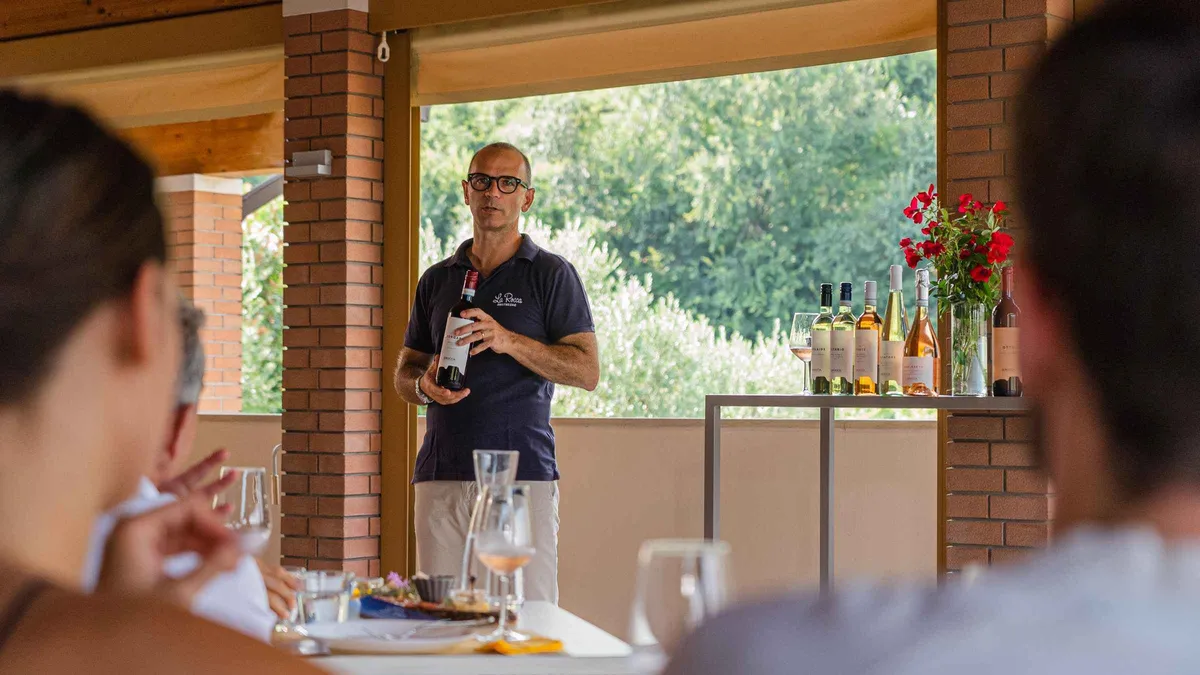 from $40
Bardolino: Vineyard Tour with Wine, Olive Oil & Food Tasting
A 1.5 hour family winery visit above Bardolino tasting 5 local wines and self produced olive oil, limited to 10 people.
Check Availability from $95
Dolomites Full-Day Tour from Lake Garda
A long 10-12 hour coach day from Lake Garda to Pordoi Pass and Ortisei with an optional €28 cable car, from $95 per person.
Check AvailabilityPrices, ratings and details are the platform's own. Dollar figures are the listed prices. The platform bills in your account's currency.
If the Answer Is Yes
The pages that turn the verdict into a trip.
Is Lake Garda Worth It: Questions
Is Lake Garda worth visiting?
Yes, for two to four days between late March and October. It is Italy's largest lake at 369.98 km2 and 51.60 km long, with Roman ruins at Sirmione, a cable car to Monte Baldo, wine towns on the east shore and beaches in the south. The conditions that decide it are the ferry season and your base, so match the shore to the month on the Lake Garda ferry page before booking.
Is Lake Garda worth it in winter?
Only with lowered expectations or a car. From 2 November to 12 March no passenger boat runs, the only service is the Maderno-Torri car ferry, so a car-free visitor sees one shore. The Monte Baldo cable car also closes from 2 November to 25 December. The upside is quiet lanes and low room rates, plus the Christmas markets in the north. Details are on Lake Garda in winter.
Is Lake Garda worth a day trip from Verona or Milan?
Yes, it is one of the easiest day trips in northern Italy. Desenzano and Peschiera sit on the Milan-Venice railway line, so Verona gets you to the water fast. If you would rather not plan the connections, the Sirmione and Lazise day from Verona with a boat crossing costs $123 and runs 7.5 hours with a guided walk and free time in both towns. The rail and boat route is on Verona to Lake Garda.
Is Lake Garda worth visiting without a car?
Between late March and early November, yes. Trains reach Desenzano and Peschiera, the ferry network links the piers with fares from $1.68 (€1.50) to $19.55 (€17.50) one way, and ATV buses run the east shore. The two gaps are the north tip, which has no station and is reached by bus from Rovereto, and winter, when no passenger boat runs. The full comparison of options is on getting around Lake Garda.
How many days is Lake Garda worth?
Three days is the sweet spot. One day covers a single shore such as Sirmione. Two days add a second shore, three days allow the whole-lake boat run of close to 5 hours on an ordinary boat, and four days leave room for Monte Baldo at 1,760 m or a Verona afternoon. Build the trip from the ready-made plans in Lake Garda in 2 days and Lake Garda in 3 days.
Which part of Lake Garda is most worth visiting?
The south for convenience, the north for scenery. The south has the railway stations, Sirmione's Roman villa and castle, and the wine towns of Lazise and Bardolino. The north has the fjord-like arm under the mountains, the cable car from Malcesine, Limone's lemon terraces and the walking around Riva. If you have two nights and no car, base south, then boat north for a day. Compare towns on Lake Garda towns.
Is Lake Garda too crowded in summer?
Parts of it, on summer afternoons. Sirmione is the pressure point. Its centre closes to all traffic on 31 afternoons in the season from 14:00 to 19:00, and the ZTL fines for driving in unauthorised run from $92.73 (€83) to $372.03 (€333). The fix is timing and arrival. Come early, the castle opens at 8:30, or arrive by boat for $3.91 (€3.50) from Desenzano. The quiet-shore options are on Lake Garda beaches.
Judge It for Yourself
Three films that show the lake as it is: a first visit, a first day in Sirmione, and the southern towns explained.
First Impressions of LAKE GARDA Italy
A first visit filmed as it happens, useful for judging the lake for yourself.
Video: World NomacLake Garda Day 1: Exploring Sirmione
A first day in Sirmione, the town most first trips start with.
Video: We'veBinExploringLake Garda - Italy: Things to Do - What, How and Why to visit the South of the Lake (4K)
Why the southern shore draws most first visits.
Video: Luigi's Travel TipsVideos load from YouTube only when you press play.
Prices, hours and terms are set by the venue or operator and confirmed at checkout.
We may earn a commission if you book through one of our links, at no extra cost to you. Full affiliate disclosure