 Lake Garda Travel Guide
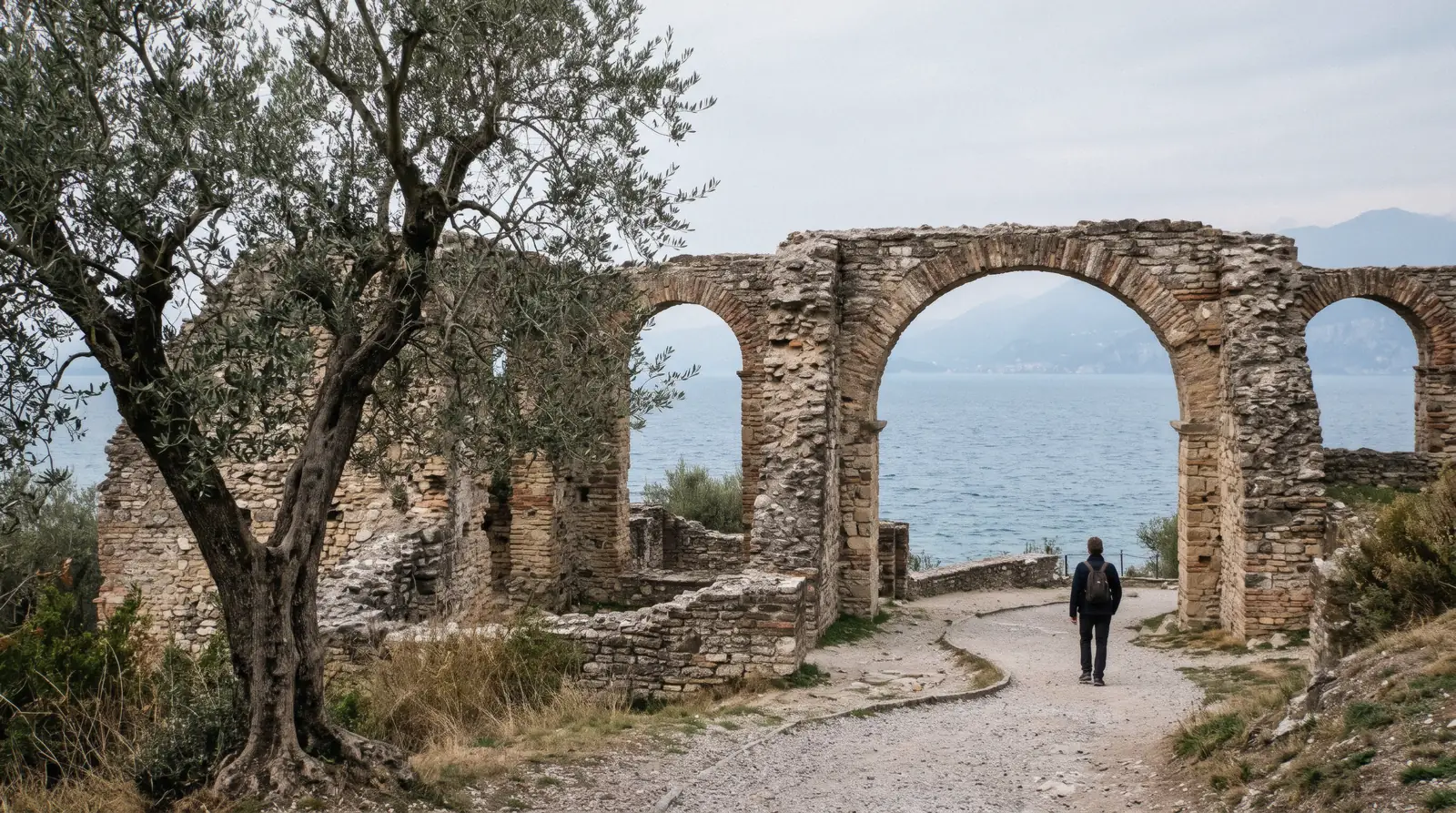
Grotte di Catullo: The Roman Villa at the Tip of Sirmione
The Grotte di Catullo are the ruins of a Roman villa, 167 by 105 m, at the tip of the Sirmione peninsula on the south shore of Lake Garda (see what to see in Lake Garda), with walls, vaults and an olive grove running to the water. Italian Wikipedia calls it the most imposing Roman villa in northern Italy. Below: the ticket, the hours, the walk through the site and how to pair it with the castle and a boat.
Quick answer Roman villa ruins on the Sirmione peninsula, closed Mondays
The Grotte di Catullo are the ruins of a Roman villa built between the end of the 1st century BC and the beginning of the 1st century AD, covering about two hectares at the northern tip of the Sirmione peninsula. The name comes from the 15th century, when travellers mistook the overgrown walls for caves and linked them to the poet Catullus. The site holds an archaeological museum inside the grounds. Hours run Tuesday to Saturday 8:30-17:00 and Sunday 8:30-14:00, closed Mondays. Last entry is 40 minutes before closing on the Ministry page, so arrive by 16:20 on weekdays and 13:20 on Sundays (our sum).
Key takeaways
- Buy the Grotte di Catullo and museum ticket at $15 per person plus a $3.35 (€3) booking fee, or combine with the castle using the ticket sold at the ticket office.
- Check the opening hours before you go: Sunday closes at 14:00 and Mondays the site is shut all day, along with 1 January and 25 December.
- Skip the car. The historic centre sits inside a summer ZTL with fines from $92.73 (€83). See getting there and Sirmione boat trips.
Key facts
Opening hours
| Tue-Sat | 08:30–17:00 |
|---|---|
| Sun | 08:30–14:00 |
Closed Mondays, 1 January and 25 December. Last entry 40 minutes before closing
Admission
- Adult
- $15 plus a $3.35 (€3) booking fee for [the Grotte di Catullo and museum ticket](#tour-18)
- Reduced
- EU citizens aged 18-25 pay a reduced rate at the ticket office (cards only)
- Free
- Under 18, students and teachers with valid ID
Planning it
- Time needed
- About 40 minutes on the shortest accessible route (operator listing), about 1.5 hours for the full site and museum (our estimate)
- Book ahead
- Optional — walk-up usually fine
- Address
- Piazzale Orti Manara, 25019 Sirmione BS, Italy
Grotte di Catullo Tickets and Boat Trips Past the Ruins
The ways in: the Grotte di Catullo and museum ticket, which covers the outdoor ruins and the indoor museum, the castle ticket for the other end of the old town, and two boat trips that pass the ruins from the water. A combined ticket covering the castle, the Grottoes and the Roman Villa in Desenzano, valid 7 days, is sold at the ticket office. Payment at the site is by card only.
Do you want only the Roman ruins, or the ruins and the castle on the same day?
| Option | Price | Includes | Cancel | Book |
|---|---|---|---|---|
| Grotte di Catullo and museum tickettravellers who want the ruins and museum with entry sorted in advance | $15 per person plus a $3.35 (€3) booking fee | The ruins, the outdoor archaeological area and the museum | Non-refundable | Check Availability |
| Castle entry ticket with tower accessanyone adding the castle climb to the same Sirmione day | $15 per person | The Scaligero Castle and its keep, at the other end of the old town | Non-refundable | Check Availability |
| 25-minute peninsula cruisevisitors short on time who want to see the ruins from the water | $13 per person | The ruins from the water, skipper narration | Free up to 24 hours before | Check Availability |
| Cruise and guided walk, 2 hourssmall groups who want a guided walk plus a boat ride and a drink | $88.95 per person | 40 minutes by boat, a guided walk, a drink | Free up to 24 hours before | Check Availability |
Prices are the sellers' own, in US dollars as listed. The $3.35 (€3) booking fee is added at checkout. Figures current in Q4 2026.
Tickets and Tours for the Grotte di Catullo
These are the Sirmione options that pair with a visit to the ruins. Prices are per person as listed and tours marked free cancellation can be dropped up to 24 hours ahead.
 from $15
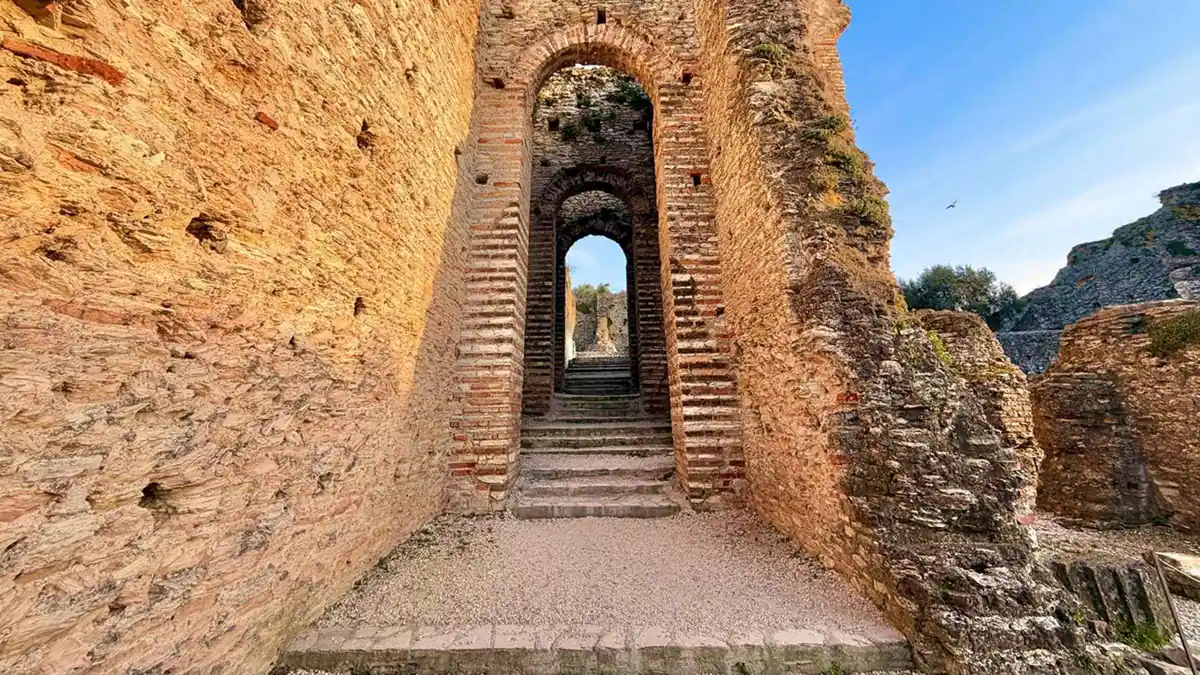
Sirmione: Entry Ticket to Grotte di Catullo & Museum
A self-guided $15 entry ticket combining Northern Italy's largest Roman villa ruins with the Sirmione Archaeological Museum.
Check Availability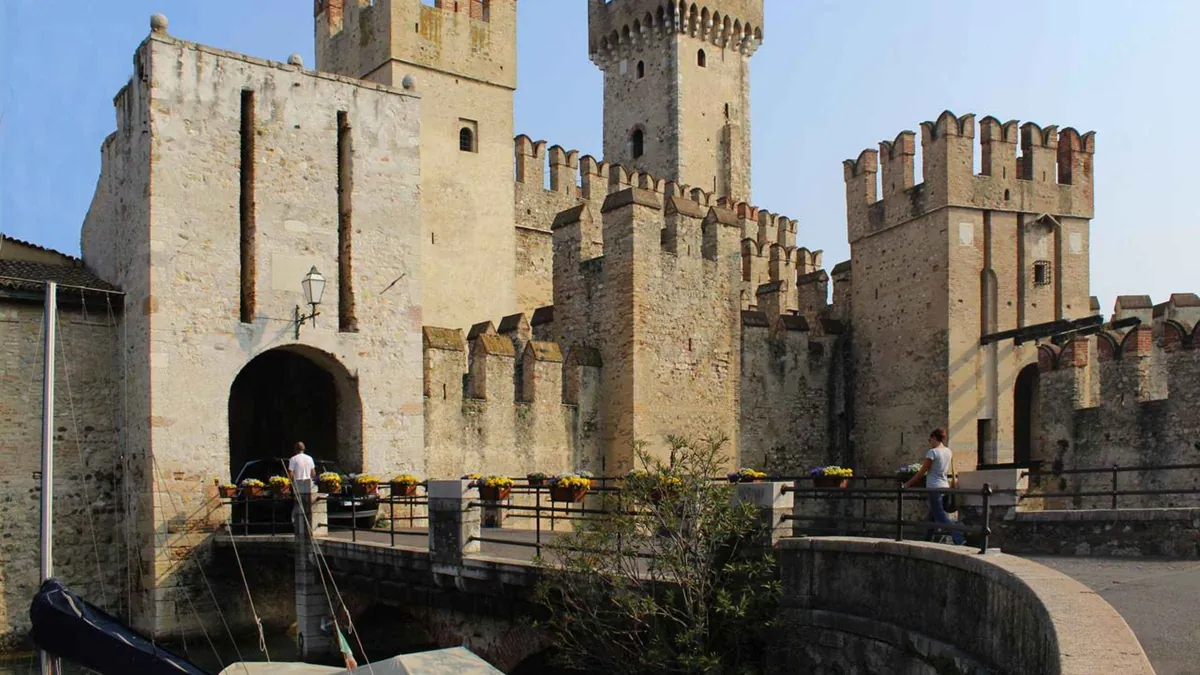 from $15
Sirmione: Entry Ticket to Castello Scaligero & Tower Access
A self-guided castle ticket with tower access at $15 per person, cheaper than any guided Lake Garda day trip.
Check Availability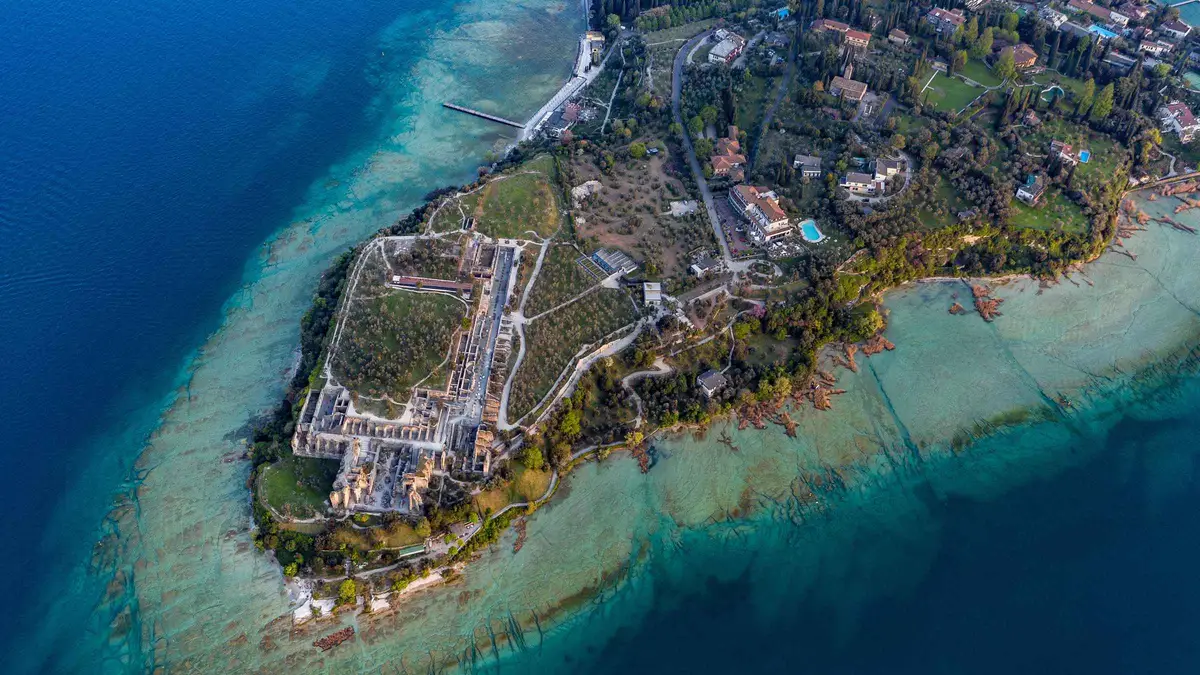 from $13
Editor's pick
Sirmione: 25 Minute Boat Cruise around the Peninsula
A short and cheap 25 minute loop around the Sirmione peninsula with captain narration, run by the operator based at the castle harbor.
Check Availability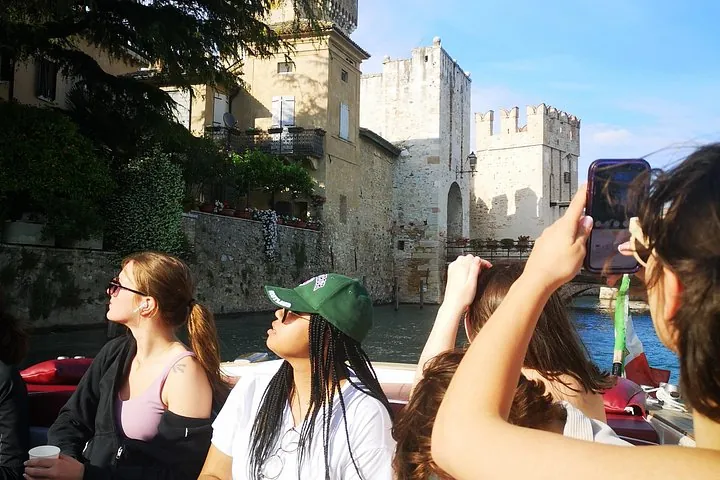 from $88.95
Sirmione away from the Crowds Boat Cruise Guided Walk and a Drink
A small-group 2 hour Sirmione boat cruise plus guided walk ending with a free drink, capped at 12 people
Check Availability from $34.21
Sunset Tour in Sirmione
A short, low-cost 45-minute sunset boat loop around Sirmione with a glass of Prosecco, no full-day commitment.
Check AvailabilityPrices, ratings and details are the platform's own. Dollar figures are the listed prices. The platform bills in your account's currency.
What the Grottoes of Catullus Are
The site confuses first-timers: the name says caves, the reality is a villa. Here is what you actually walk through.
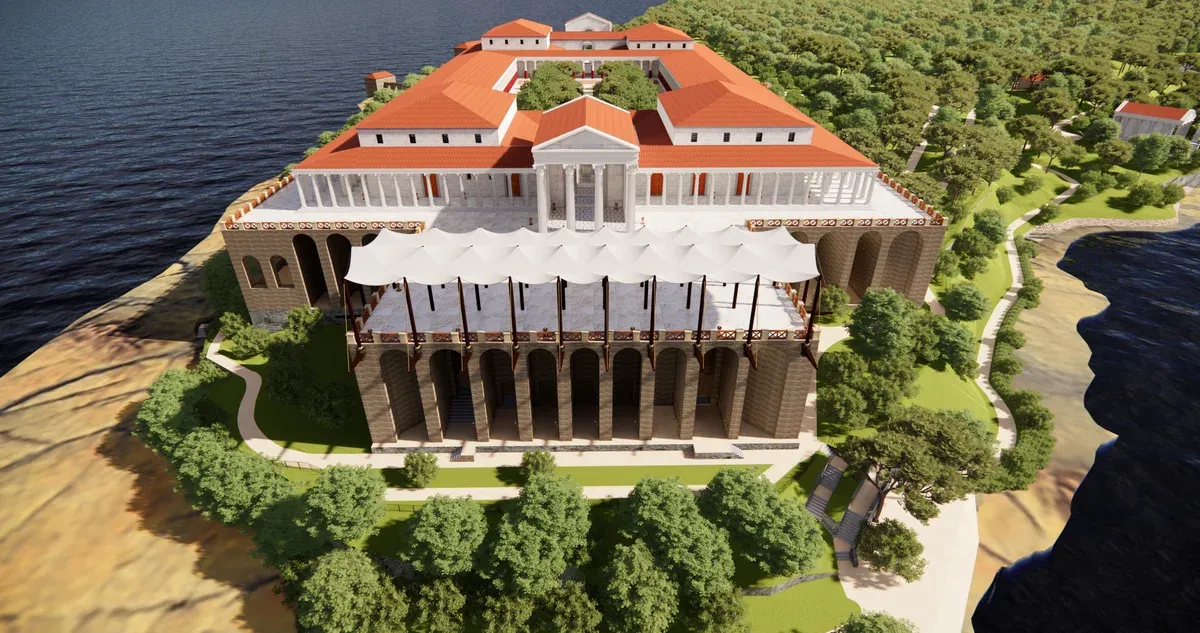
A digital reconstruction of the villa seen from the north, not a photograph. Illustration: Frank-Arne Knoth, CC BY-SA 4.0, via Wikimedia Commons
A Roman Villa, Not a Cave
The Grotte di Catullo are the remains of a grand Roman villa built between the end of the 1st century BC and the beginning of the 1st century AD, though VisitSirmione stretches construction up to the 2nd century AD. The building measured 167 by 105 m, and the archaeological area covers about two hectares at the tip of the peninsula. Italian Wikipedia calls it the most imposing Roman villa in northern Italy.
Enough of the walls stands to read the plan: terraces, a long cryptoporticus and halls facing the lake. It is assumed to have belonged to the Gens Valeria of Verona. Buy the Grotte di Catullo and museum ticket in advance and start with the museum inside the grounds, which explains what you are about to see.
Why Catullus Gets the Credit
The poet Catullus, from Verona, lived from about 84 to 54 BC, and in his poem 31 he describes coming home to his house at Sirmione (Wikipedia). The ruins, however, were built after his death, so he never lived in this building. The name comes from the 15th century, when travellers found the walls so overgrown and buried that they took them for natural caves, or grotte.
Marino Sanuto first connected the site to the poet in 1483. Isabella d'Este visited in 1514 and 1535, and the architect Andrea Palladio came to study how it was built. The link is romantic rather than factual, but the name has held for five centuries.
Source: VisitSirmione, Wikipedia.
Walking the Site, Stop by Stop
The grounds hold more than broken walls. Plan roughly this order and the visit makes sense.
The Archaeological Museum
The museum opened in 1999 inside the site itself, so you pass it on the way in rather than making a separate trip. Its collection covers three layers of the peninsula: finds from the pile-dwelling settlements around the southern shore of the lake, Roman Sirmione, and the medieval period that followed. Expect mosaics, fresco fragments and Roman and Longobard artefacts.
It gives context that the bare ruins cannot, so most visitors do well to see it first. Dogs on a lead are welcome outside, but only small carried dogs may enter the museum. Start here, then walk out into the ruins.
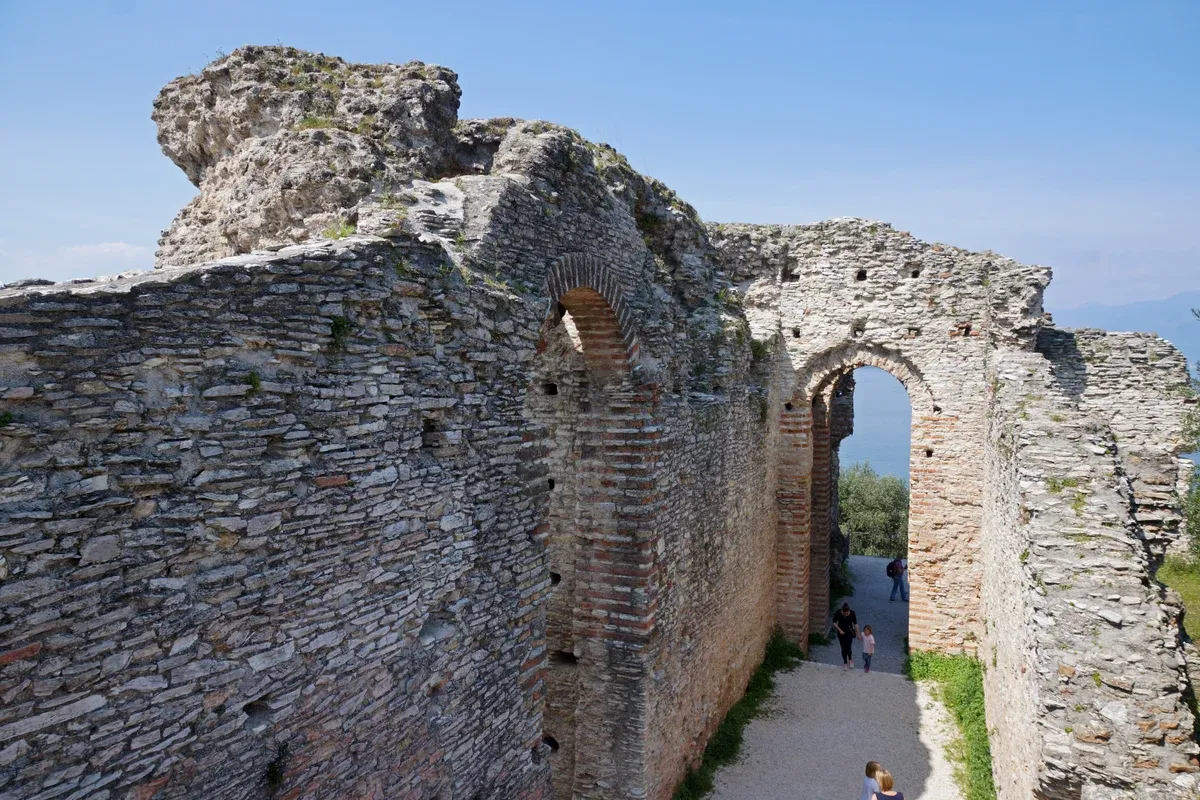
Stone and brick walls with an arched passage inside the site. Photo: Allie_Caulfield from Germany, CC BY 2.0, via Wikimedia Commons
The Great Cryptoporticus
The cryptoporticus is the signature structure of the villa, a long covered gallery running under the villa's terraces. Walking its length shows the scale of the place better than any view from outside: this was one supporting wing of a building 167 m long. The tour listing names it among the highlights along with the Giants' Hall and the Walnut Field.
The shortest accessible route through the site, suitable for visitors with reduced mobility, takes about 40 minutes by the seller's count, and the full walk takes longer. Wear shoes with grip on the old stone and gravel.
The Giants' Hall
The Giants' Hall is one of the named stops on the route through the villa, among its largest spaces. Its walls tell the later story of the site. By the 3rd century the villa had been abandoned, and part of its decoration was reused in another Roman villa in Sirmione.
In the 4th and 5th centuries its standing walls were folded into the late Roman fortifications that closed the peninsula, and burials were dug inside the ruins. General Lacombe-Saint-Michel studied the ruins in 1801 and Count Giovanni Girolamo Orti Manara published his excavations in 1856. Allow a few minutes here to take in the lake beyond.
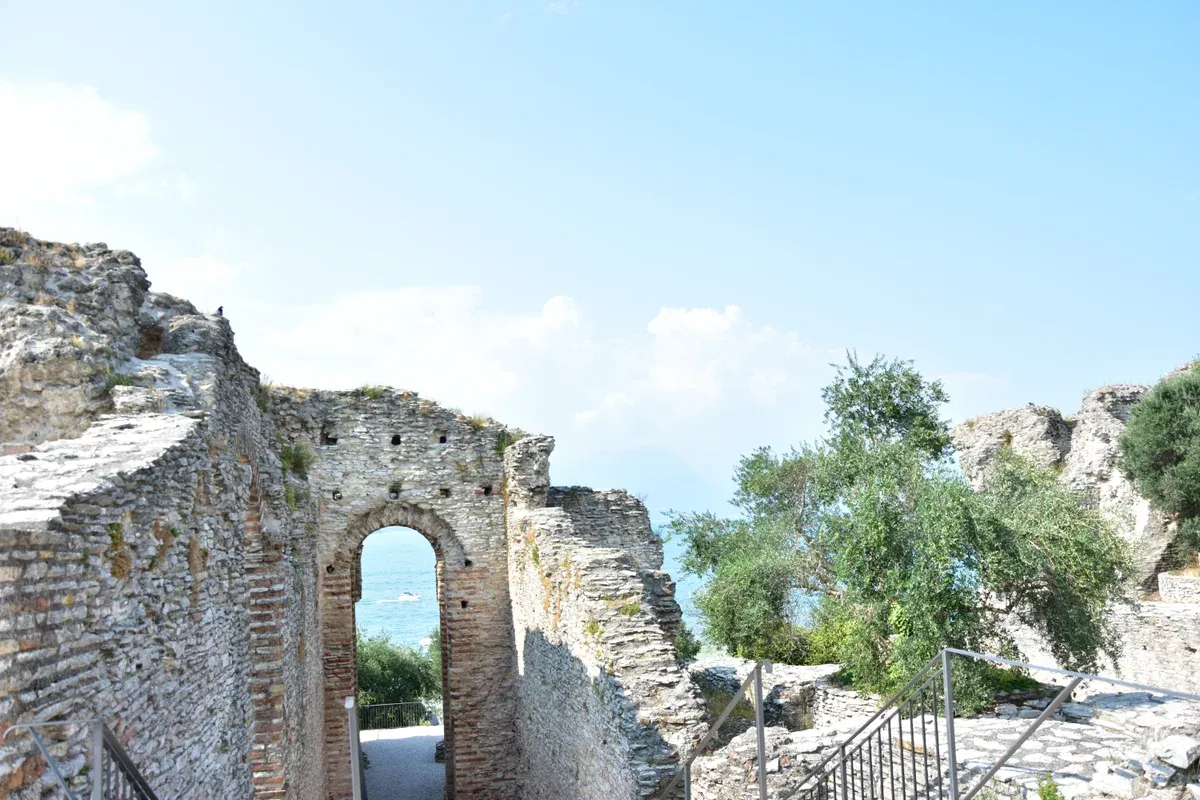
An arch of the villa opening onto the lake, with olive trees beside it. Photo: Daniela Lorenzetti, CC BY-SA 4.0, via Wikimedia Commons
The Olive Grove
About 1,500 olive trees grow among the ruins, of the casaliva, leccino and gargnà varieties, and the harvest resumed in 2012 after a long pause. Some of the trees are centuries old, and the grove makes the site a working farm as well as a ruin: the oil is pressed again. It is also the pleasant part of the walk in summer, because the paths through the trees hold some shade.
The site covers about two hectares, so there is room to wander. Combine the grove with the lake-view circuit at the northern tip.
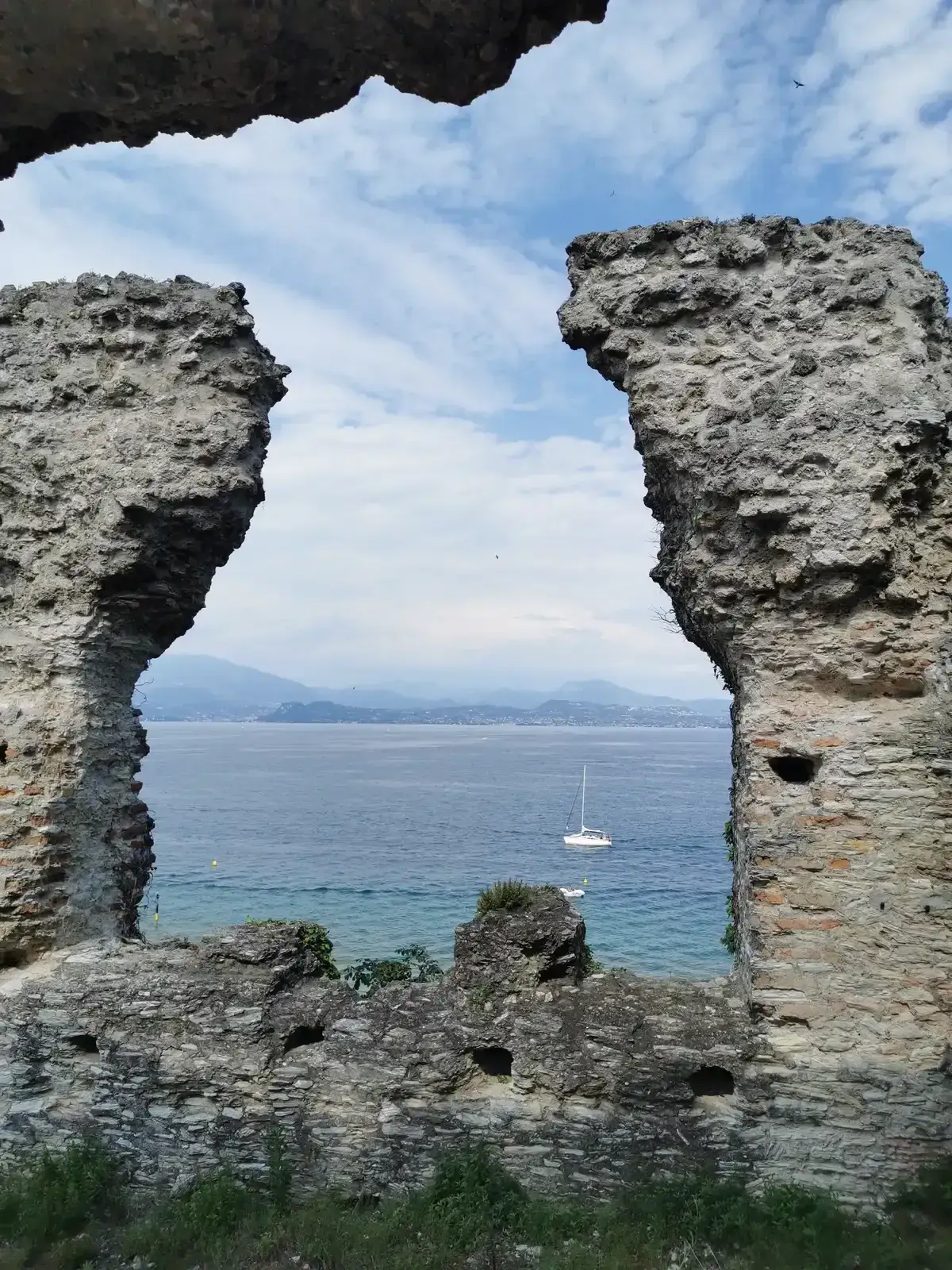
Ruined piers at the tip of the site, with the open lake behind. Photo: MoniMarti67, CC BY-SA 4.0, via Wikimedia Commons
The Northern Tip and the Lake View
The villa was built at the very end of the Sirmione peninsula, so the northern edge of the site drops straight to the lake with open water on three sides. This is where the panorama pays off: across the water you look toward the mountains of the upper lake, and below you the rocky shoreline runs along the base of the ruins. The 25-minute Sirmione peninsula cruise passes the Grottoes from exactly this angle, which explains why so many visitors do both.
Allow time to stand at the edge before walking back through the olive grove.
Source: VisitSirmione, Wikipedia.
Opening Hours and the Sunday Early Close
The hours are the main thing that catches visitors out, especially the early Sunday close and the Monday shutdown.
The Ministry of Culture page lists the Grotte di Catullo at Tuesday to Saturday 8:30-17:00 and Sunday 8:30-14:00, closed Mondays, 1 January and 25 December. The page does not say whether these are summer or winter hours, so check the day's hours before you set out. The table below lays out the full week.
The pattern matters for planning: a Sunday visit must happen in the morning, and no day of the week works if Monday is your only Sirmione day. Pair the ruins with the castle, which keeps the same Monday closure but opens later into the evening on other days.
| Day | Open | Last entry (our sum) |
|---|---|---|
| Tuesday to Saturday | 8:30-17:00 | 16:20 |
| Sunday | 8:30-14:00 | 13:20 |
| Monday, 1 January, 25 December | Closed | Closed |
Last Entry and Card-Only Payment
Last entry is 40 minutes before closing on the Ministry page, so arrive by 16:20 on weekdays and 13:20 on Sundays (our sum). Payment at the site is by card only, so bring a card rather than cash. EU citizens aged 18 to 25 pay a reduced rate at the gate, and under-18s, students and teachers with valid ID enter free.
If you want the entry sorted before you travel, the Grotte di Catullo and museum ticket costs $15 per person plus a $3.35 (€3) booking fee, is non-refundable and is valid for one day.
Source: Ministry of Culture, Musei Lombardia.
How Much Time to Give the Grottoes
Three realistic routings, from a quick look to a full Sirmione sightseeing day. The table lets you match the time you have.
The shortest accessible route through the site takes about 40 minutes, and that is the baseline for a fast visit. Add the museum, the olive grove and the lake-view tip and you are closer to an hour and a half. The table below shows three ways to split your time: a short circuit of museum plus main ruins, the full site at an unhurried pace, and the ruins combined with the castle and the old town for a whole day in Sirmione.
Whichever you pick, work backwards from last entry, 40 minutes before closing.
| Routing | Time | What it covers | What it skips |
|---|---|---|---|
| Shortest accessible route | About 40 minutes (operator listing) | Museum and the main terrace | The lower vaults and the northern tip |
| Full site | About 1.5 hours (our estimate) | Museum, cryptoporticus, Giants' Hall, olive grove, the tip | Nothing inside the gate |
| Grottoes and castle | Half a day (our estimate) | Both Garda Museums sites in Sirmione | A swim or a boat trip |
The Villa in Dated Lines
From Roman construction to the opening of the museum, the site in eight dated moments.
-
Late 1st century BC - early 1st century AD
The villa is built
A grand residence of about two hectares rises at the tip of the peninsula, assumed to belong to the Gens Valeria of Verona.
-
3rd century
Abandoned
The villa is abandoned, and part of its decoration is reused in another Roman villa in Sirmione.
-
4th-5th centuries
Fortifications and burials
The standing walls are folded into late Roman defences and the area is used for burials.
-
1483
Sanuto makes the link
Marino Sanuto first connects the ruins, long mistaken for caves, with the poet Catullus.
-
1514
Isabella d'Este visits
The marchioness comes in 1514 and again in 1535, and Andrea Palladio later studies the building.
-
1856
Orti Manara publishes
Count Giovanni Girolamo Orti Manara publishes the results of his excavations, after General Lacombe-Saint-Michel studied the site in 1801.
-
1948
The state buys the site
State excavation began in 1939 and the whole area is acquired nine years later.
-
1999
The museum opens
The archaeological museum opens inside the site with finds from the pile-dwelling settlements and Roman and medieval Sirmione.
Sources: VisitSirmione, Wikipedia.
Do This, Not That
Do
- Visit the museum first so the ruins make sense when you reach them
- Arrive by 16:20 on weekdays and 13:20 on Sundays to beat last entry
- Park at Piazzale Monte Baldo or take the shuttle from Colombare
- Book the Grotte di Catullo and museum ticket ahead so entry is sorted before you travel
- Wear shoes with grip, the ancient stone paths are uneven
Don't
- Do not drive into the historic centre between 23 March and 13 October, fines run high
- Do not plan the ruins on a Monday, the site is closed all day
- Do not leave the Grottoes for a Sunday afternoon, they close at 14:00
- Do not bring cash only, payment at the site is by card
- Do not skip the northern tip, the lake view is the best in the site
Five Things Most Visitors Do Not Know
A few details that change how you read the site, each with its source.
- The villa measured 167 by 105 m, and Italian Wikipedia calls it the most imposing Roman villa in northern Italy (Wikipedia).
- The name comes from 15th century travellers who mistook the overgrown walls for caves (VisitSirmione)
- About 1,500 olive trees grow on the site and the harvest resumed in 2012 (Wikipedia)
- The building was constructed after Catullus died, so the poet never lived there (VisitSirmione)
- The state bought the whole area in 1948 after excavations began in 1939 (Wikipedia)
Getting to the Tip of the Peninsula
The ruins sit at the far northern end of the Sirmione peninsula, past the castle and the whole old town, so how you arrive matters.
On Foot Through the Old Town
The site stands at the far northern tip of the narrow peninsula, beyond the Scaligero Castle gate and the whole old town, so every arrival ends on foot. The old town lies inside the ZTL, so no visitor car reaches the door. The ticket office is at Piazzale Orti Manara.
Leave time for the walk out and back through the lanes, particularly on a Sunday when last entry is 13:20 (our sum). Want the walk done for you with context? The cruise and guided walk with a drink covers the side streets with a guide.
By Car, Bus or Boat
Driving is the trap. The historic centre sits inside a summer ZTL in force from 23 March to 13 October, and driving in without authorisation brings a fine of $92.73 (€83) to $372.03 (€333). Park instead at Piazzale Monte Baldo, the main car park for the old town, or take the shuttle bus that runs from Colombare to the historic centre from April to October.
By boat, public Navigazione Laghi services dock at the pier in Piazza Carducci, and the 25-minute Sirmione peninsula cruise departs from the small harbour by the castle. See our page on getting around Lake Garda for the wider picture.
Source: Comune di Sirmione, VisitSirmione parking, VisitSirmione public transport.
Grotte di Catullo Map: From the Castle Gate to the Tip
The Grottoes sit at the northern tip of the peninsula. The castle gate, the car park and the ferry pier are at the southern end of the old town.
Next Stop From the Grottoes
Four easy pairings once you have walked the ruins.
Scaliger Castle
The moated castle guards the entrance to the peninsula, so you pass it on the way to the Grottoes. The town's account dates it after the middle of the 14th century, built by the Della Scala of Verona. The ticket seller counts 146 steps to the keep, and it closes on Mondays like the ruins. The Sirmione castle guide has the hours and the ticket.
Terme di Sirmione
The SPA & Thermal Garden in the old town uses sulphurous water from the Boiola spring, which reaches 69 C at the source. The spring rises 19 m below the lake surface and was only piped at the end of the 19th century. The spa opens every day, Mondays included, and booking is compulsory. See the Terme di Sirmione guide.
Sirmione boat trips
The ruins look their best from the lake. The 25-minute peninsula cruise passes the Grottoes, the sulphur spring and Maria Callas' villa, and the sunset tour with Prosecco covers the same water at the end of the day. Both leave from the small harbour in front of the castle. Compare them on the Sirmione boat trips page.
Beaches near the ruins
The rocky shore runs along the base of the ruins and the tip of the peninsula, with the water open on three sides once you reach the northern edge of the site. Swimming spots around Sirmione and the rest of the south shore are gathered on the Lake Garda beaches page, so you can cool off after the walk out to the villa.
Grotte di Catullo Questions
Are there Roman ruins in Sirmione?
Yes. The Grotte di Catullo are the remains of a Roman villa built between the end of the 1st century BC and the beginning of the 1st century AD, at the tip of the peninsula, and the museum inside the site adds finds from Roman and medieval Sirmione. A second Roman villa stands in Desenzano, and a combined ticket sold at the ticket office covers it with the Grottoes and the castle. See more things to do around Lake Garda.
How do you get to the Grotte di Catullo?
The site stands at the far northern tip of the Sirmione peninsula, beyond the castle gate and the whole pedestrian old town, so every visit ends with a walk. Cars must stay outside the summer ZTL, in force from 23 March to 13 October, with fines from $92.73 (€83). Park at Piazzale Monte Baldo, take the shuttle bus from Colombare that runs April to October, or arrive by boat at the pier in Piazza Carducci. Details are on our getting around page.
What are the opening times for the Grotte di Catullo?
The Ministry page lists Tuesday to Saturday 8:30-17:00 and Sunday 8:30-14:00. The site closes on Mondays and on 1 January and 25 December. The page does not say whether these hours are summer or winter, so check the day's hours before you go. Last entry is 40 minutes before closing, which means arriving by 16:20 on weekdays and 13:20 on Sundays (our sum). The full week is laid out in the hours section.
How much do Grotte di Catullo tickets cost?
The Grotte di Catullo and museum entry ticket costs $15 per person plus a $3.35 (€3) booking fee, is non-refundable and is valid for one day. EU citizens aged 18 to 25 pay a reduced rate at the gate, and under-18s, students and teachers with valid ID enter free. Payment at the site is by card only. A combined ticket covering the castle, the Grottoes and the Roman Villa in Desenzano, valid 7 days, is sold at the ticket office.
Did the poet Catullus live in the villa?
No. Catullus was born around 84 BC and died around 54 BC, and the villa was built after his death. In poem 31 he describes coming home to his house at Sirmione, which is why the ruins carry his name. The connection was first made by Marino Sanuto in 1483, and the name stuck even though the building is assumed to have belonged to the Gens Valeria of Verona rather than the poet. The history runs through our timeline.
How long do you need at the Grotte di Catullo?
The shortest accessible route through the site takes about 40 minutes, which is the quick version. With the museum, the olive grove and the lake-view tip, plan on around an hour and a half. If you are pairing the ruins with the castle and the old town, block out most of a day and check the time planning section for the three routings. On Sundays work backwards from the 13:20 last entry (our sum), since the site closes at 14:00.
Can you see the Grotte di Catullo from the water?
Yes, and it is the best angle on the villa. The 25-minute Sirmione peninsula cruise at $13 per person passes directly below the ruins, along with the sulphur spring and the castle. The 45-minute sunset tour with Prosecco covers the same circuit at golden hour. Both leave from the small harbour in front of the castle, so you can walk the site first and see it again from the lake the same day.
Where the Grottoes Fit in a Sirmione Day
The Sunday early close and the castle's longer weekday hours produce two different plans for a Sirmione day on Lake Garda, along with more Lake Garda attractions.
Sunday: Grottoes First
On Sunday the Grotte di Catullo shut at 14:00 with last entry by 13:20 (our sum), while the castle keeps its longer day. Walk through the old town early, reach the ruins at the 8:30 opening and give the museum the first hour, then cross to the castle after lunch. If you would rather read the ruins from the water, the 45-minute sunset tour with Prosecco runs in the evening and fits neatly after the castle.
The order is forced on Sundays, so book the morning slot and do not leave the ruins for the afternoon.
Weekdays: Castle at Opening, Grottoes Before Lunch
Tuesday to Saturday the castle opens at 8:30 with the last ticket 45 minutes before its 19:15 close, so the tower is calm early. Start there, climb the 146 steps before the heat and the crowds, then walk out to the Grotte di Catullo before lunch. For a deeper day, the 2-hour small-group cruise and guided walk with a drink adds the peninsula from the water and the quieter lanes of the town.
Keep the evening free for the lakefront, or browse the full set of Lake Garda tours if you have more days. Both sites close on Mondays, so plan around that.
The Grotte di Catullo on Film
An aerial film from the Ministry of Culture, a walk through the ruins and a reconstruction of the villa.
Grotte di Catullo, In volo sull'archeologia italiana
The Ministry of Culture's aerial film of the whole site.
Video: MiC_ItaliaSirmione: Grotte di Catullo
A walk through the ruins and the olive grove.
Video: Travel GardaRicostruzione delle Grotte di Catullo
The site's own reconstruction of how the villa looked.
Video: Grotte di CatulloVideos load from YouTube only when you press play.
Prices, hours and terms are set by the venue or operator and confirmed at checkout.
We may earn a commission if you book through one of our links, at no extra cost to you. Full affiliate disclosure